The format spec, in one table
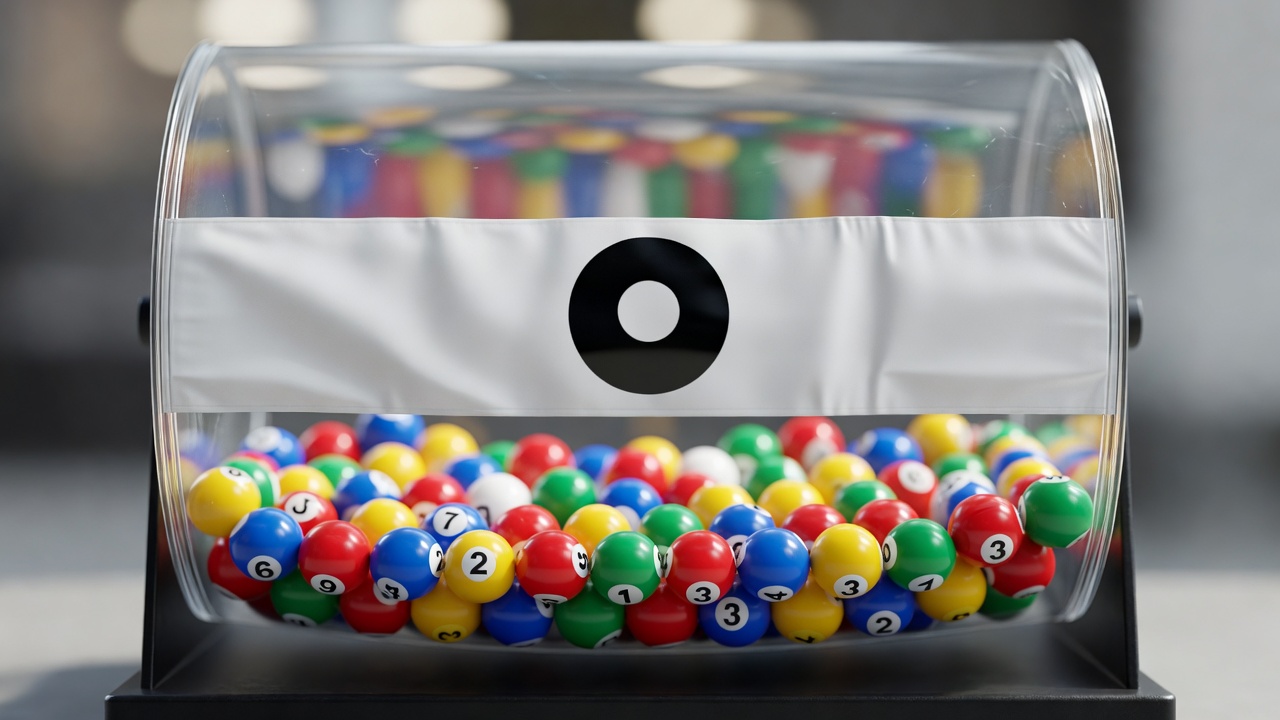
A single-pool game asks the player to choose a fixed quantity of numbers from a fixed range. On draw night the same quantity is drawn from a drum containing one ball for every number in that range. Prizes depend on how many of the player's numbers match. That is the entire frame; everything else is a parameter.
| Parameter | Typical setting |
|---|---|
| Drums | One |
| Pool | Numbered balls, commonly 1–45 up to 1–59; outliers exist, such as 1–90 in Italy's SuperEnalotto |
| Numbers chosen | Usually 6; some games use 5 or 7 |
| Extras | Bonus or supplementary balls from the same drum, or a separate single digit |
| Prize basis | Count of main matches, with an extra affecting one or two tiers |
| Jackpot | Usually a shared (pari-mutuel) pool that rolls over when not won |
| Schedule | Commonly two draws a week |
Counting the combinations behind 6/49
The odds of the top prize come straight from counting how many different sets of six numbers the drum could produce. Order does not matter in lotto: 4, 17, 22, 31, 40, 45 is the same line however the balls fall. Mathematicians write this count as "49 choose 6".
The working is short. There are 49 options for the first ball, 48 for the second, and so on down to 44 for the sixth. Multiplying those gives 10,068,347,520 ordered sequences. Each set of six can be arranged in 720 different orders (6 × 5 × 4 × 3 × 2 × 1), so dividing by 720 leaves 13,983,816 distinct sets. One ticket line covers one of them.
The same method works for any single-pool game. A 6/47 game has 10,737,573 possible sets, a 6/59 game has 45,057,474, and a 6/90 game reaches 622,614,630. Notice how quickly the total climbs: adding ten balls to a 49-ball drum more than triples the count. That is why small changes to pool size are among the most consequential decisions an operator makes.
Two things the arithmetic does not care about: which numbers you pick and how often a number has appeared before. Every set of six is exactly as likely as every other set in a fair draw, including 1, 2, 3, 4, 5, 6. Choosing unpopular numbers can only affect how many people you might share a prize with, not your chance of winning it.
Prize tiers: what a partial match is worth
Few players hit six, so the prize table is built around partial matches. To find the chance of matching exactly three, count the ways to pick three of the six winning numbers (20) and three of the 43 losing ones (12,341), then divide by the total. The table below runs that calculation for a plain 6/49 game with one bonus ball drawn after the main six.
| Matches | Winning sets | Approximate odds |
|---|---|---|
| 6 | 1 | 1 in 13,983,816 |
| 5 + bonus | 6 | 1 in 2,330,636 |
| 5 | 252 | 1 in 55,491 |
| 4 | 13,545 | 1 in 1,032 |
| 3 | 246,820 | 1 in 57 |
| 2 | 1,851,150 | 1 in 7.6 |
Lower tiers are usually fixed amounts or free plays, because the operator needs those prizes to be predictable. Upper tiers are usually shares of a pool: a fixed percentage of sales is assigned to the tier and divided among everyone who reached it. That is why a five-number prize can be generous one week and modest the next.
When nobody matches six, the jackpot share is added to the next draw. Many operators cap this growth. A common device is the roll-down: after a set number of rollovers, or once the jackpot reaches a ceiling, the money must be paid out and flows to the next tier with a winner.
Bonus balls, supplementaries and other extras
Single-pool games differentiate themselves mostly through extras. The terms below appear on rule sheets across Europe, Canada and Australia, and they are easy to confuse.
- Bonus ball
- An extra ball drawn from the same drum after the main six. In UK Lotto it only matters for the five-plus-bonus tier; it never counts toward the jackpot.
- Supplementary numbers
- The Australian name for one or more extra balls drawn after the main set, used to create additional mid-tier prizes in games such as Saturday Lotto.
- Superzahl
- In Germany's Lotto 6aus49, a single digit from 0 to 9 that is not drawn from the main drum. The top tier requires six correct numbers and the matching Superzahl, which multiplies the jackpot odds by ten.
- Jolly and SuperStar
- Italy's SuperEnalotto draws a Jolly number for a five-plus-Jolly tier and offers SuperStar, an optional extra number that works as a separate add-on.
- Quick pick / Lucky Dip
- A random selection made by the terminal. It has exactly the same chance as a hand-chosen line.
- Rollover
- An unwon jackpot carried into the next draw.
- Pari-mutuel
- A prize paid as a share of a pool rather than a fixed sum.
Single-pool games on file
The table lists several long-running national games that use this shape. The point of comparison is the matrix, not the brand: each row shows how the same frame produces very different odds.
| Game | Country | Matrix | Extra | Top-tier odds |
|---|---|---|---|---|
| Lotto | United Kingdom | 6 from 59 | Bonus ball | 1 in 45,057,474 |
| Lotto 6aus49 | Germany | 6 from 49 | Superzahl 0–9 | 1 in 139,838,160 |
| Lotto 6/49 | Canada | 6 from 49 | Bonus number | 1 in 13,983,816 |
| Lotto | Ireland | 6 from 47 | Bonus number | 1 in 10,737,573 |
| SuperEnalotto | Italy | 6 from 90 | Jolly; optional SuperStar | 1 in 622,614,630 |
UK Lotto offers a useful case study. In October 2015 its pool grew from 49 balls to 59. The jackpot odds moved from about 1 in 14 million to about 1 in 45 million, and a new lowest tier, a free play for matching two numbers, was added so that more tickets would win something. One parameter changed and the character of the game changed with it: fewer, larger jackpots after longer runs of rollovers.
Reading a new single-pool game in six steps
- Find the matrix: how many numbers you choose and the size of the pool.
- Calculate or look up "pool choose picks" to get the jackpot odds.
- Check whether there is an extra and whether it comes from the same drum or a separate one.
- Read the prize table and mark which tiers are fixed and which are shared.
- Look for rollover limits, roll-down rules or a jackpot cap.
- Note the draw days and the claim deadline, which in many countries is 180 days or less.
This page explains rules and arithmetic only. It is not advice to play, and no method improves the odds shown. Players must be adults under local law.