The format spec
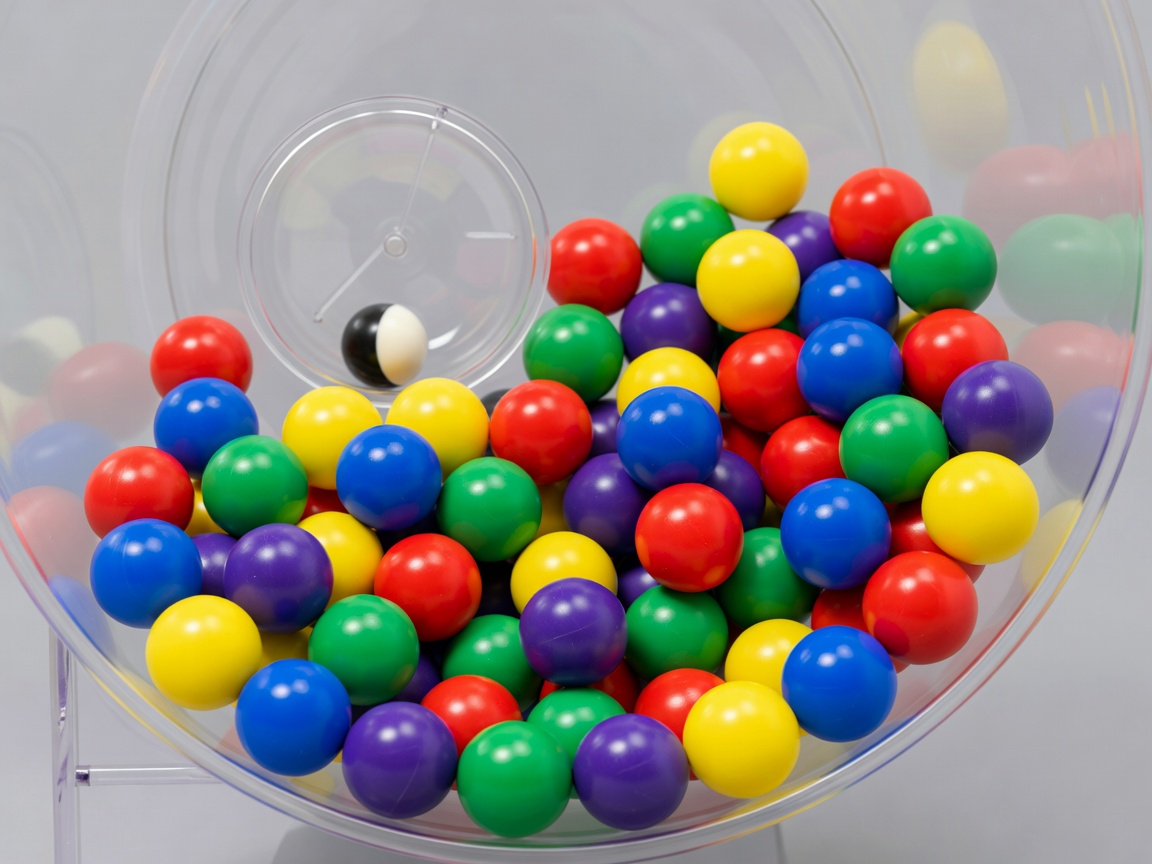
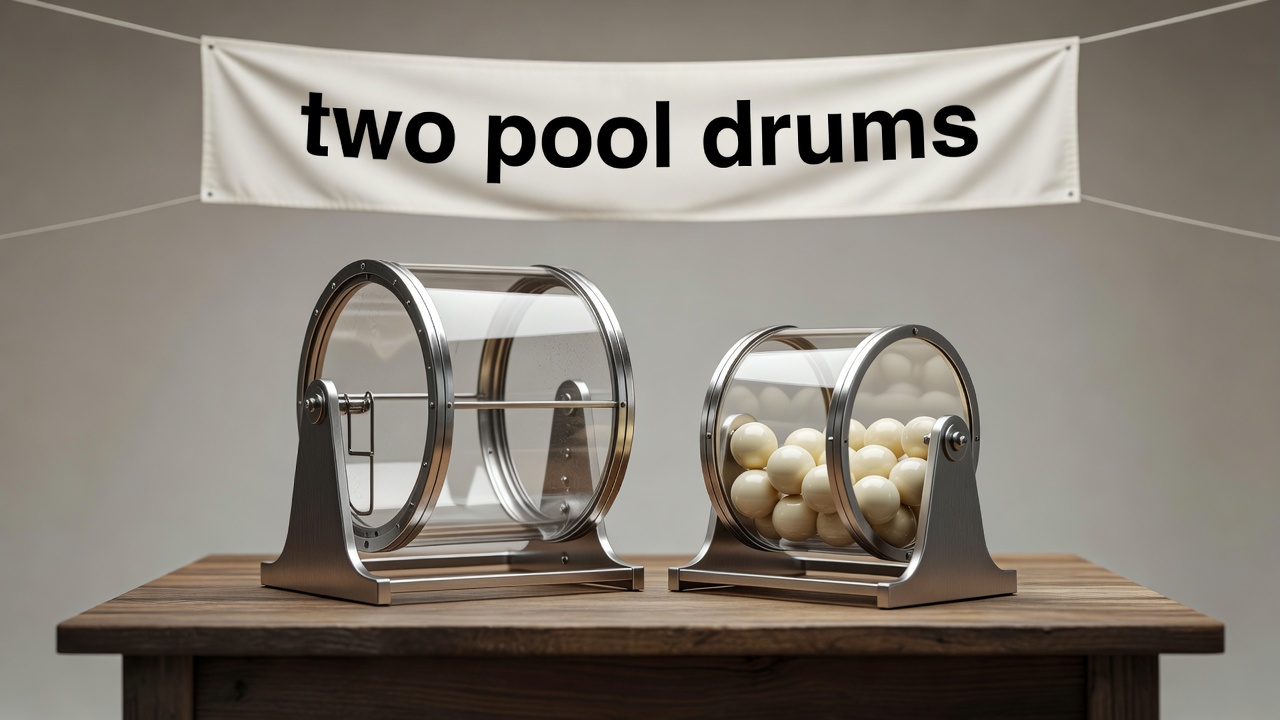
A two-pool game asks for two separate selections on the same line: a set of main numbers from a large pool and one or two numbers from a smaller pool. The draw mirrors this with two machines. A number in the second pool has nothing to do with the same number in the first; a 7 drawn as a main ball and a 7 drawn as the extra ball are different events.
| Parameter | Typical setting |
|---|---|
| Drums | Two, drawn independently |
| Main pool | 5 numbers from roughly 1–39 up to 1–70 |
| Second pool | 1 number from about 1–26, or 2 from 1–12 |
| Prize basis | Main matches combined with second-pool matches |
| Lowest tier | Often the second-pool number alone |
| Jackpot | Rolling, sometimes advertised as an annuity value, sometimes capped |
| Schedule | Commonly two or three draws a week |
Why a designer adds a second drum
Large jackpots need long odds; otherwise the top prize is won too often to grow. With a single pool, reaching odds of hundreds of millions would require a drum of well over a hundred balls, a ticket that is tiring to fill in and a draw that is slow to televise. Splitting the problem into two small drums reaches the same territory with numbers a player can scan at a glance.
The second drum also lets designers build a prize ladder with very cheap rungs. A tier that pays for matching only the extra ball can be won fairly often, which keeps the share of winning tickets reasonable even when the jackpot is remote. And because the two pools are separate, the prize table can reward combinations such as "three main numbers plus the extra" with clean, published odds.
There is a commercial reason too, which is worth stating plainly: long odds produce frequent rollovers, and rollovers produce the headline jackpots that drive sales. The format is engineered for that pattern.
How the odds multiply
Take Powerball's current matrix: five main numbers from 69 and one Powerball from 26. The main draw has "69 choose 5" possible results, which is 11,238,513. The second draw has 26. Since every main result can pair with every Powerball result, the total is 11,238,513 × 26 = 292,201,338. One line covers one of them.
EuroMillions works the same way with two numbers in the second pool. Five from 50 gives 2,118,760 results; two Lucky Stars from 12 gives 66. Multiplied, that is 139,838,160. Curiously, this equals the top-tier odds of Germany's 6aus49 with its Superzahl, reached by an entirely different route.
The same multiplication shows why the extra-ball-only tier is relatively common. In Powerball, the chance of matching no main numbers but the Powerball itself is about 1 in 38, and the operator publishes the chance of winning any prize at about 1 in 25.
Reading a two-pool tier structure
Prize tables in this format are best read as a grid. One axis counts main matches from zero to five; the other counts second-pool matches, either zero or one (or zero to two in EuroMillions and Eurojackpot). Each paying cell is a tier. Powerball pays nine tiers; EuroMillions pays thirteen, because two Lucky Stars create more cells.
Not every cell pays. Matching one or two main numbers without the extra ball usually wins nothing, because those outcomes are so common that paying them would drain the prize fund. Lower and middle tiers are frequently fixed amounts in US games, while European games more often express them as shares of a tier pool, so the same tier can pay different sums from draw to draw.
| Main matches | With extra ball | Without extra ball |
|---|---|---|
| 5 | Jackpot | Top fixed or shared prize |
| 4 | Often pays | Often pays |
| 3 | Often pays | Often pays |
| 2 | Often pays | Usually nothing |
| 1 | Often pays | Nothing |
| 0 | Often pays (lowest tier) | Nothing |
Two-pool games on file
| Game | Where | Main pool | Second pool | Jackpot odds |
|---|---|---|---|---|
| Powerball | United States | 5 from 69 | 1 from 26 | 1 in 292,201,338 |
| Mega Millions | United States | 5 from 70 | 1 from 24 | 1 in 290,472,336 |
| EuroMillions | Nine European countries | 5 from 50 | 2 from 12 | 1 in 139,838,160 |
| Eurojackpot | A group of European countries | 5 from 50 | 2 from 12 | 1 in 139,838,160 |
| Thunderball | United Kingdom | 5 from 39 | 1 from 14 | 1 in 8,060,598 |
Matrices in this format are revised more often than in single-pool games. Mega Millions changed its structure in April 2025, shrinking the second pool to 24 balls, raising the ticket price and building a multiplier into every play. Eurojackpot widened its second pool from 10 to 12 numbers in 2022. Thunderball shows the other end of the scale: the same shape with smaller pools and a fixed top prize instead of a rolling jackpot.
EuroMillions, launched in 2004 by operators in France, Spain and the United Kingdom, is also an example of pooling across borders: one draw, one shared jackpot fund, ticket sales from several national operators. Multi-jurisdiction pooling is what allows jackpots of this size at all.
Multipliers, raffles and other bolt-ons
Two-pool games carry more add-ons than any other format, and most of them are a second format attached to the first. A multiplier, such as Powerball's optional Power Play, draws a separate number that multiplies non-jackpot prizes for players who paid extra. A raffle element, such as the UK's Millionaire Maker codes on EuroMillions tickets or France's My Million, is effectively a ticket-number draw printed on the same slip.
When reading a ticket, separate the core lines from the extras. Each add-on has its own odds, its own cost and its own prize rules, and none of them changes the odds of the main game.
Rules described here are for understanding only. No strategy improves the odds of a two-pool game, and players must meet the legal age where they live.
Terms used in two-pool rules
- Main numbers
- The five numbers drawn from the larger pool.
- Powerball / Mega Ball
- The single number from the second pool in the two big US games.
- Lucky Stars / Euro numbers
- The two second-pool numbers in EuroMillions and Eurojackpot respectively.
- Annuity value
- An advertised jackpot expressed as the total of payments spread over years; the lump-sum option is smaller.
- Jackpot cap
- A ceiling beyond which the jackpot stops growing and extra money flows to lower tiers, used in several European games.
- Multiplier
- A separately drawn factor that increases eligible non-jackpot prizes.